
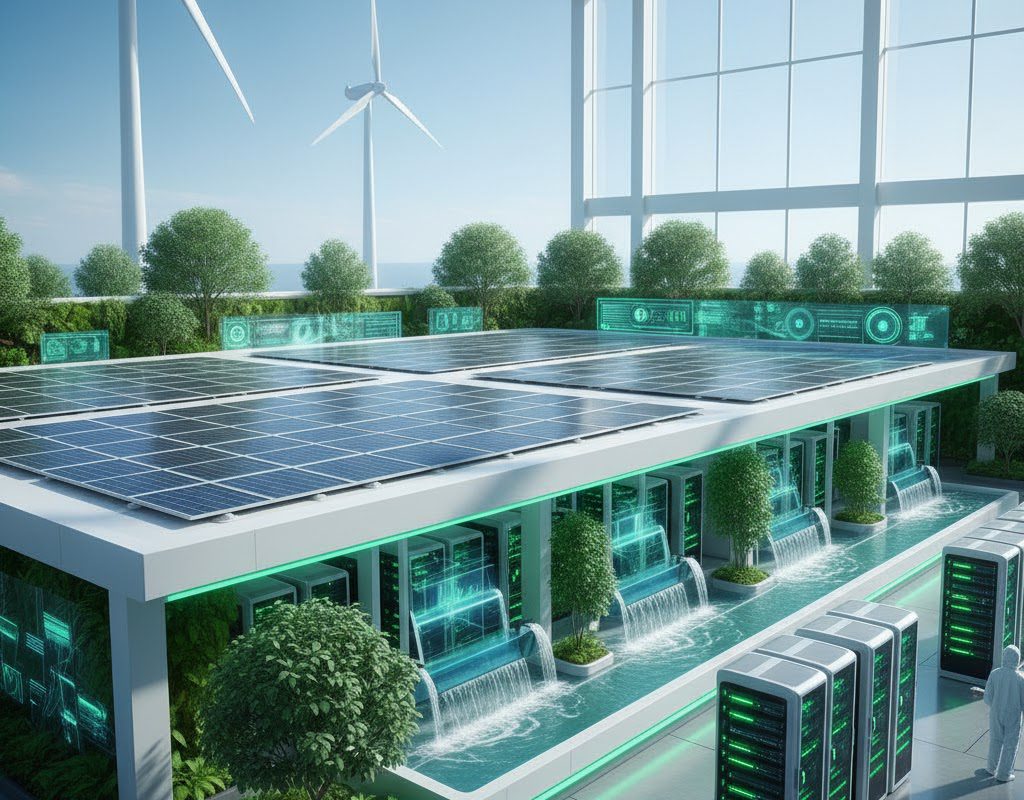
Industri teknologi digital telah menjadi salah satu konsumen energi terbesar di dunia, dengan data centers saja menyumbang sekitar 2-3% dari total konsumsi energi global. Di tengah meningkatnya kesadaran akan perubahan iklim dan kebutuhan untuk sustainability, green hosting telah bertransformasi dari niche concept menjadi essential requirement bagi responsible businesses di tahun 2025. Artikel ini akan membahas komprehensif tentang sustainable web hosting, teknologi terbaru, dan best practices untuk environmental-friendly digital presence.
Krisis Energi di Digital Age
Impak environmental dari digital infrastructure semakin menjadi perhatian global:
1. Data Center Energy Consumption
Statistics yang mengejutkan tentang energy usage:
– Global data centers mengkonsumsi 200-250 TWh per tahun
– Setiap tahun konsumsi energi meningkat 4-6%
– Cooling systems menyumbang 40% dari total energy usage
– Carbon footprint dari digital infrastructure setara dengan aviation industry
2. E-Waste Generation
Hardware lifecycle environmental impact:
– 50 juta ton e-waste dihasilkan secara global setiap tahun
– Server replacement cycles setiap 3-5 tahun
– Hanya 20% e-waste yang diproses secara proper
– Toxic materials dalam computing equipment
3. Water Usage
Hidden environmental cost dari digital infrastructure:
– Data centers menggunakan 1.8 liter air per kWh energy consumed
– Cooling systems membutuhkan massive water resources
– Water pollution dari facility operations
– Regional water scarcity impacts
Green Hosting Technologies dan Inovasi
1. Renewable Energy Integration
Sustainable power generation untuk hosting:
– Solar panel installations dengan battery storage
– Wind power integration untuk grid independence
– Geothermal energy untuk consistent power supply
– Hydroelectric power untuk clean energy generation
2. Advanced Cooling Technologies
Efficient temperature management systems:
– Liquid cooling dengan direct-to-chip technology
– Immersion cooling dengan non-conductive fluids
– Natural cooling menggunakan outside air
– AI-optimized cooling systems dengan predictive algorithms
3. Energy-Efficient Hardware
Sustainable computing infrastructure:
– ARM-based processors dengan lower power consumption
– Solid-state drives (SSDs) dengan improved efficiency
– Low-power memory technologies
– Energy-proportional computing systems
4. Carbon Capture Technologies
Direct carbon removal solutions:
– Direct air capture (DAC) systems integration
– Carbon-negative hosting operations
– Reforestation partnerships untuk carbon offsetting
– Bioenergy dengan carbon capture dan storage
Leading Green Hosting Providers 2025
1. GreenGeeks
Pioneer dalam environmental hosting:
– 300% renewable energy commitment
– Wind energy credits purchasing
– Carbon-neutral hosting operations
– Environmental activism involvement
2. A2 Hosting
Sustainable hosting practices:
– Green hosting certification
– Energy-efficient data centers
– Paperless office operations
– Environmental responsibility programs
3. Kinsta
Premium eco-friendly hosting:
– Google Cloud infrastructure dengan renewable energy
– Carbon-neutral platform operations
– Energy-efficient technologies adoption
– Sustainable development practices
4. SiteGround
Environmentally responsible hosting:
– Data centers dengan renewable energy
– Energy-efficient hardware utilization
– Paperless business operations
– Corporate sustainability initiatives
Technical Implementation Strategies
1. Energy Efficiency Optimization
Reducing power consumption:
– Server virtualization untuk higher density
– Power usage effectiveness (PUE) optimization
– Dynamic voltage dan frequency scaling
– Workload consolidation strategies
2. Sustainable Architecture Design
Green building practices:
– LEED certified data center facilities
– Natural lighting utilization
– Green roof implementations
– Sustainable material usage
3. Water Conservation Technologies
Reducing water footprint:
– Closed-loop cooling systems
– Rainwater harvesting systems
– Water recycling dan treatment
– Low-flow cooling technologies
4. Waste Reduction Programs
Minimizing environmental impact:
– Hardware recycling programs
– Extended server lifecycles
– Component-level repairs vs. replacement
– Sustainable procurement policies
Carbon Footprint Measurement dan Reporting
1. Comprehensive Carbon Accounting
Accurate environmental impact measurement:
– Scope 1, 2, dan 3 emissions tracking
– Real-time carbon monitoring systems
– Third-party verification processes
– Public sustainability reporting
2. Green Metrics dan KPIs
Environmental performance indicators:
– Carbon intensity per computing unit
– Renewable energy percentage
– Power usage effectiveness (PUE) scores
– Water usage effectiveness (WUE) metrics
3. Certification Standards
Industry recognized environmental certifications:
– ISO 14001 Environmental Management
– LEED Green Building Certification
– Energy Star certification
– Carbon Trust Standard
4. Transparency Reporting
Public environmental accountability:
– Annual sustainability reports
– Real-time energy usage dashboards
– Carbon offset program documentation
– Environmental impact assessments
Business Benefits dari Green Hosting
1. Brand Reputation Enhancement
Corporate responsibility advantages:
– Enhanced customer loyalty
– Positive public perception
– Competitive differentiation
– Employee attraction dan retention
2. Cost Optimization
Financial benefits dari sustainability:
– Reduced energy costs
– Operational efficiency improvements
– Government incentives utilization
– Long-term savings accumulation
3. Regulatory Compliance
Meeting environmental regulations:
– Carbon tax preparation
– Environmental law compliance
– Future regulation readiness
– Risk mitigation strategies
4. Market Opportunities
New business development avenues:
– Green market segment targeting
– Sustainability-focused partnerships
– Environmental grant opportunities
– Innovation ecosystem participation
Implementation Guide untuk Green Hosting Migration
1. Assessment Phase
Environmental impact evaluation:
– Current carbon footprint analysis
– Energy consumption auditing
– Sustainability gap assessment
– Provider green capability evaluation
2. Planning Phase
Strategic migration development:
– Green hosting provider selection
– Migration timeline development
– Budget allocation untuk green initiatives
– Success criteria definition
3. Implementation Phase
Execution dari green hosting strategy:
– Phased migration implementation
– Performance optimization
– Staff training programs
– Process documentation
4. Optimization Phase
Continuous improvement processes:
– Performance monitoring
– Energy usage optimization
– Cost-benefit analysis
– Strategy refinement
Innovative Green Technologies Masa Depan
1. Biodegradable Computing
Eco-friendly hardware development:
– Biodegradable server components
– Mushroom-based packaging materials
– Sustainable rare earth alternatives
– Circular economy computing models
2. Ambient Energy Harvesting
Novel power generation methods:
– Kinetic energy harvesting
– Thermoelectric generation
– Piezoelectric energy capture
– Ambient RF energy harvesting
3. Quantum Efficiency Optimization
Ultra-low power computing:
– Quantum dot technologies
– Neuromorphic computing architectures
– Reversible computing principles
– Near-zero power standby modes
4. Carbon-Negative Operations
Beyond carbon neutrality:
– Direct air capture integration
– Bio-sequestration partnerships
– Carbon mineralization processes
– Climate-positive business models
Challenges dalam Green Hosting Adoption
1. Higher Initial Costs
Sustainable technology investment premiums:
– Renewable energy infrastructure costs
– Energy-efficient equipment pricing
– Certification process expenses
– Staff training investments
2. Performance Trade-offs
Efficiency vs. sustainability balance:
– Renewable energy intermittency challenges
– Energy-efficient hardware limitations
– Geographic constraints untuk green facilities
– Performance optimization complexities
3. Complexity Management
Environmental program implementation:
– Multiple certification requirements
– Complex carbon accounting processes
– Cross-functional coordination needs
– Regulatory compliance complexity
4. Market Education
Customer awareness gaps:
– Green hosting value proposition communication
– Environmental impact education
– Cost-benefit justification
– Competitive differentiation challenges
Future Trends 2026-2030
1. Net-Zero Data Centers
Completely carbon-neutral facilities:
– On-site renewable energy generation
– Energy storage system integration
– Carbon capture technology deployment
– Closed-loop resource utilization
2. Circular Economy Computing
Sustainable hardware lifecycle:
– Component-level reparability
– Material recovery systems
– Refurbished equipment markets
– Design for disassembly principles
3. AI-Optimized Sustainability
Machine learning untuk environmental optimization:
– Predictive energy management
– Dynamic workload placement
– Resource efficiency optimization
– Anomaly detection untuk waste reduction
4. Blockchain for Green Tracking
Transparent environmental monitoring:
– Immutable carbon footprint records
– Renewable energy credit verification
– Supply chain sustainability tracking
– Environmental impact tokenization
Action Items untuk Website Owners
1. Green Hosting Audit
Evaluate current environmental impact:
– Carbon footprint assessment
– Energy consumption analysis
– Provider sustainability evaluation
– Improvement opportunity identification
2. Sustainable Migration Strategy
Plan transition ke green hosting:
– Green provider research dan selection
– Migration timeline development
– Budget planning untuk green transition
– Success metrics definition
3. Performance Optimization
Reduce environmental footprint:
– Website optimization untuk efficiency
– Content delivery network optimization
– Code efficiency improvements
– Image dan media optimization
4. Stakeholder Communication
Share sustainability commitments:
– Environmental impact reporting
– Green hosting certification display
– Sustainability story communication
– Community involvement initiatives
Kesimpulan
Green hosting telah evolved dari optional extra menjadi business imperative di 2025. Environmental responsibility不再是 nice-to-have melainkan expectation dari customers, investors, dan regulators. Organizations yang embrace sustainable hosting practices akan memiliki competitive advantages yang significant di increasingly environmentally conscious market.
Success requires holistic approach yang combines technological innovation, strategic planning, stakeholder engagement, dan continuous improvement. Investment dalam green hosting bukan expense melainkan strategic investment yang delivers financial, environmental, dan reputational returns.
The future of digital infrastructure adalah sustainable. Organizations yang lead environmental transformation akan position themselves sebagai responsible corporate citizens dan industry leaders dalam era digital yang bertanggung jawab. Green hosting bukan tentang sacrificing performance melainkan about achieving excellence dalam environmental stewardship.
Leave A Comment?
You must be logged in to post a comment.